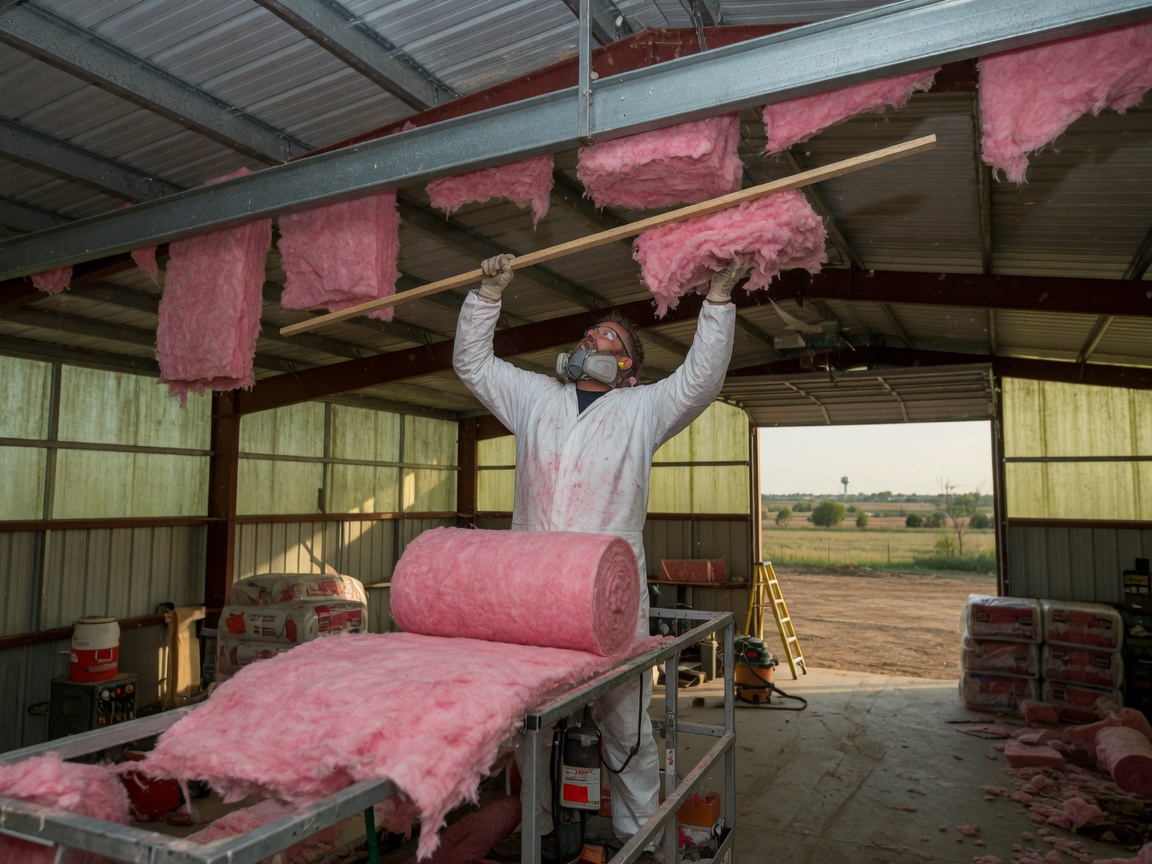
Pole barns in Tulsa County often sit on open ground with metal siding that conducts heat and cold quickly. Fiberglass batts or blankets placed between girts and purlins slow that transfer when installed with tight fits around bracing and no gaps at the base. In neighborhoods like Maple Ridge or near the Gathering Place where older barns back up to tree lines, moisture from frequent thunderstorms can collect behind poorly sealed fiberglass, so we always pair it with a continuous vapor retarder on the warm side.
Summer humidity in areas such as Cherry Street and Greenwood pushes dew points high enough that fiberglass must be kept away from direct metal contact to avoid condensation. We run a 6-mil poly or smart retarder over the fiberglass before interior liner panels go up, especially on barns in Jenks and Bixby where afternoon storms roll through regularly. This detail matters more than R-value alone because once fiberglass gets damp it loses performance and stays wet through the cold winters.
Cold snaps that hit Owasso and Broken Arrow drive heat loss through the roof plane faster than through walls. We install unfaced fiberglass between purlins first, then add a second layer perpendicular across the bottom chords when headroom allows, creating a thermal break over the steel. This approach handles the temperature swings without compressing the material or leaving voids around ridge vents common on Tulsa County pole barns.
Technician insight
In Tulsa the thing that catches most people out with fiberglass pole barn insulation is skipping the vapor retarder on the interior side. Our humid summers and sudden cold fronts create condensation on the metal before winter even arrives, especially on barns in low spots near the Arkansas River or in Bixby.
Jenks Barn Retrofit
The owner noticed damp spots on the north wall after repeated spring storms. We found compressed fiberglass that had never had a retarder. We removed the wet material, installed new unfaced batts with a sealed 6-mil layer, and the wall stayed dry through the next thunderstorm season.
Fiberglass Pole Barn Insulation Services We Offer
✓Purlin Cavity Fiberglass Installation
Fits unfaced fiberglass between purlins on Tulsa County pole barns to cut roof heat loss during winter freezes.
✓Girt Wall Batt Insulation
Places fiberglass between wall girts with vapor retarder to manage humidity from summer thunderstorms in Jenks and Bixby.
✓Ridge and Eave Detail Work
Seals fiberglass at ridge vents and eaves on barns near Route 66 Historical Village to stop air and moisture movement.
✓Vapor Retarder Overlay
Adds 6-mil poly or smart membrane over fiberglass in humid Tulsa County conditions to prevent condensation on metal.
✓Existing Barn Retrofit
Removes damaged fiberglass and reinstalls new batts in older pole barns around Greenwood and Pearl District.
Fiberglass Pole Barn Insulation Cost in Tulsa, OK
| Service | Typical Range | What Affects It |
|---|---|---|
| Wall fiberglass batts per square foot | $1.10–$1.85 | Higher when vapor retarder and perimeter sealing added |
| Roof purlin fiberglass per square foot | $1.25–$2.10 | Two-layer install increases price in cold-winter barns |
| Vapor retarder add-on | $0.45–$0.75 | Required on most Tulsa County jobs due to humidity |
Ranges are typical for Tulsa, OK and confirmed with an exact written quote before any work starts.
How it works
- 1
Site Assessment
Walk the barn in Tulsa County to check girt spacing, existing moisture, and roof pitch before any fiberglass work begins.
- 2
Material Staging
Deliver unfaced fiberglass and vapor retarder to the site at 8411 E 41st St and stage inside the barn away from weather.
- 3
Batt Installation
Cut and friction-fit fiberglass between purlins and girts, then seal all seams with the retarder layer.
- 4
Final Inspection
Check for gaps, compression, and proper overlap at eaves before the owner closes in the interior.
Pricing
Pricing varies by barn size, access, and whether a vapor retarder layer is added.