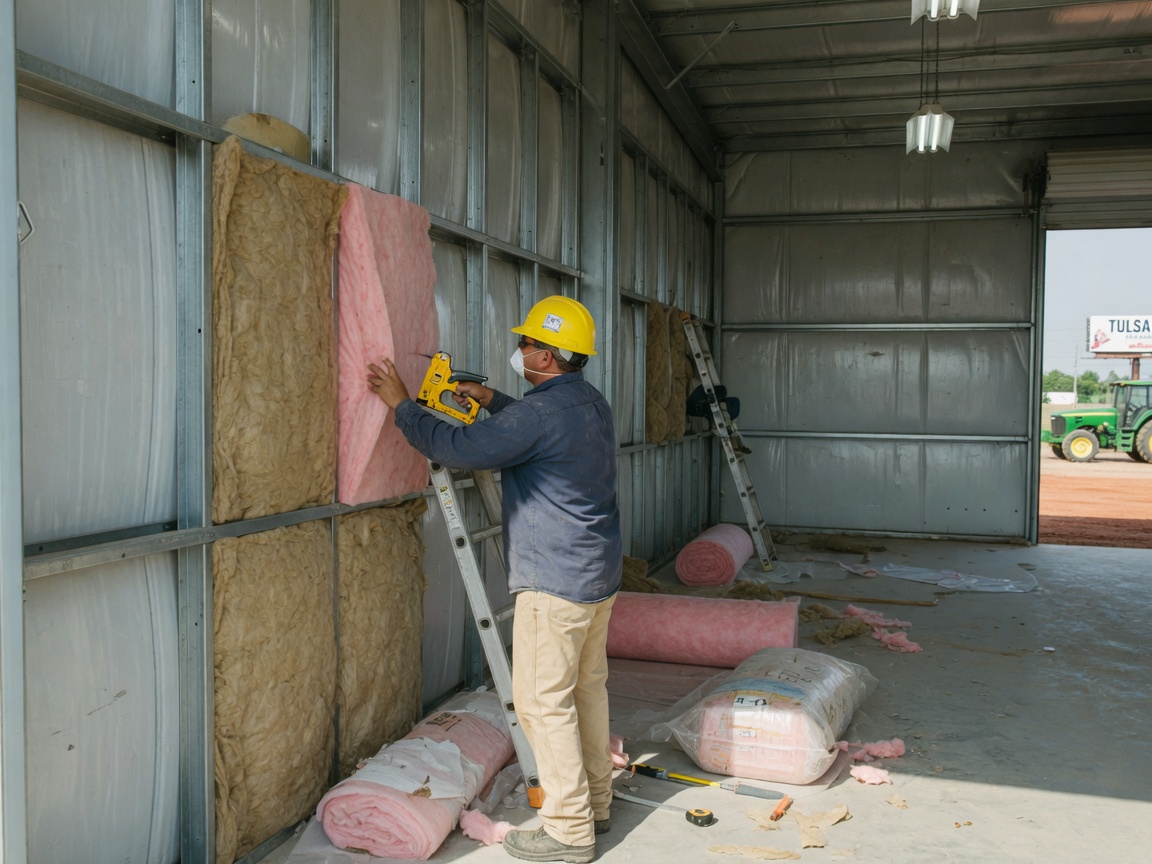
Metal buildings in Tulsa County often face condensation issues during warm humid summers followed by cold winter nights, especially in shops located near the Arkansas River or in low-lying spots around Maple Ridge and Pearl District. Closed-cell spray foam works well here because it creates a moisture barrier that prevents rust on metal panels while adding structural strength against frequent severe thunderstorms. Open-cell options suit interior walls where breathability matters more, but installers must account for the age of buildings in areas like Greenwood and Cherry Street where older metal frames can have hidden corrosion.
Edge cases appear regularly in pole barns and shops near Route 66 Historical Village or the Tulsa Air and Space Museum, where wind-driven rain during storms can push water under eaves and into insulation cavities. Proper vapor retarders and sealed seams become critical in these conditions to avoid mold growth once temperatures drop. Crews working in Bixby or Owasso also watch for soil movement from clay-heavy ground that can shift building foundations and crack rigid board insulation over time.
Code compliance in Tulsa County requires attention to fire ratings around electrical panels common in metal shops, and installers verify clearances before spraying. Homeowners in Jenks and Downtown Tulsa sometimes overlook how existing girts and purlins create thermal bridges that reduce overall R-value unless addressed during the job.
Technician insight
In Tulsa the thing that catches most people out with Metal Building & Shop Insulation is how quickly condensation forms on the underside of metal roofs once a cold front moves in after a humid summer day. Shops near the river or in flatter sections of Bixby see this faster than those on higher ground, and skipping a continuous vapor layer turns a straightforward job into a mold remediation call six months later.
Shop Near Greenwood With Persistent Condensation
A metal shop in Greenwood showed water streaks on interior panels after several thunderstorms. Inspection revealed missing seals at the eaves and no vapor barrier. Closed-cell foam was applied to the roof deck and walls with added seam sealing. The owner reported stable interior temperatures through the next winter without further moisture issues.
Metal Building & Shop Insulation Services We Offer
✓Spray Foam Insulation for Metal Shops
Closed-cell spray foam applied directly to metal panels and framing to block moisture and stabilize temperatures in Tulsa shops exposed to summer humidity and winter freezes.
✓Rigid Board Insulation Installation
Fitting rigid foam boards between girts in metal buildings to improve energy performance while maintaining clearance for electrical and mechanical systems common in local shops.
✓Vapor Barrier and Sealing for Pole Barns
Installing continuous vapor retarders and sealing seams to prevent condensation buildup inside metal structures during Tulsa's rapid weather changes.
✓Attic and Roof Deck Insulation
Adding insulation at the roof deck level of metal shops to reduce heat gain in summer and heat loss in winter for buildings in areas like Brookside and Utica Square.
✓Wall Cavity Insulation for Metal Buildings
Filling wall cavities with appropriate foam or batt materials while working around existing bracing and utilities found in older Tulsa County metal shops.
Metal Building & Shop Insulation Cost in Tulsa, OK
| Service | Typical Range | What Affects It |
|---|---|---|
| Spray Foam Application | $1.50–$3.00 per sq ft | Varies with closed-cell vs open-cell choice and roof height |
| Rigid Board Installation | $1.00–$2.25 per sq ft | Affected by existing girt spacing and electrical layout |
| Vapor Barrier Addition | $0.75–$1.50 per sq ft | Higher in buildings with multiple doors or vents |
| Full Shop Insulation Package | $2.00–$4.50 per sq ft | Includes walls and roof deck in structures over 2,000 sq ft |
Ranges are typical for Tulsa, OK and confirmed with an exact written quote before any work starts.
How it works
- 1
Site Assessment
Inspect the metal structure for rust, existing insulation condition, and moisture intrusion points created by Tulsa thunderstorms.
- 2
Material Selection
Choose closed-cell or open-cell foam based on the building's exposure to humidity and temperature swings in Tulsa County.
- 3
Preparation And Sealing
Clean surfaces, seal gaps around doors and vents, and install vapor barriers where needed for local climate demands.
- 4
Application And Final Check
Apply insulation evenly, trim excess, and verify coverage around girts and penetrations before leaving the site.
Pricing
Costs depend on building size, insulation thickness, and access conditions in Tulsa County.