2026-10-06 · Paul Hayes
Is It Worth Insulating a Pole Barn You Only Use as a Shop?
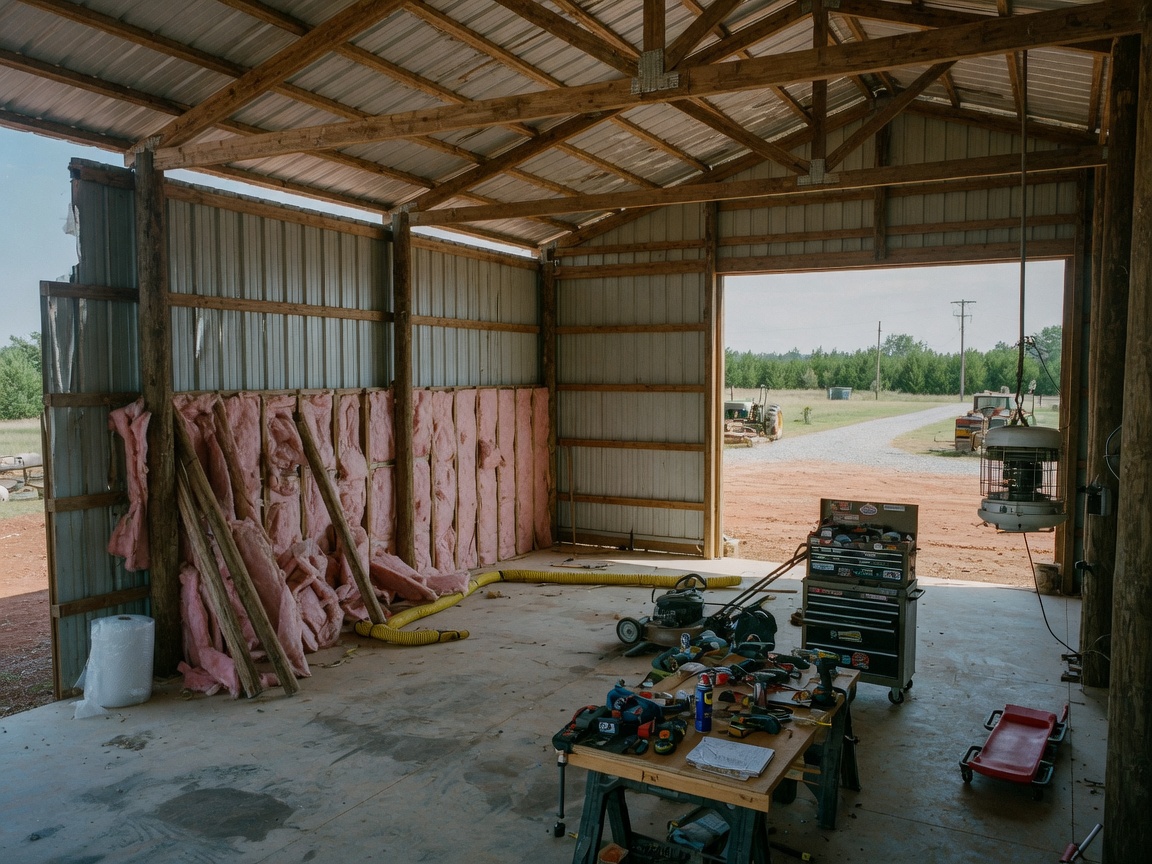
Yes, insulating a pole barn you use only as a shop is worth it for most owners in Tulsa County. The cold winters and frequent severe thunderstorms create temperature swings and moisture that damage tools, vehicles, and stored materials within a few seasons. Spray foam or other insulation stabilizes the interior so you can work comfortably year-round without running heaters or dehumidifiers constantly.
Temperature Swings and Daily Shop Use
Tulsa experiences warm humid summers followed by cold winters that often drop below freezing. A metal pole barn without insulation turns into an oven or icebox within hours of the outside temperature changing. Owners in neighborhoods like Maple Ridge and Pearl District who run small fabrication or auto repair shops report that insulated buildings let them start work immediately instead of waiting for the space to warm up. The same pattern holds in Jenks and Bixby where many pole barns sit on larger lots with less tree cover. Adding insulation reduces the time spent fighting the weather and keeps hand tools and electronics from overheating or freezing overnight.
Managing Condensation and Humidity
Severe thunderstorms bring high humidity that condenses on uninsulated metal roofs and walls. This moisture drips onto workbenches, rusts equipment, and promotes mold on stored lumber or cardboard. Shops in Greenwood and near the Route 66 Historical Village often see this problem intensify during spring and fall storm seasons. Proper insulation paired with attention to vapor control stops the cycle before water reaches surfaces. Readers facing similar conditions can review Do You Need a Vapor Barrier in Pole Barn Walls? for details on placement that matches Oklahoma conditions.
Energy Costs and Payback in Tulsa County
Heating a 30x40 shop through a Tulsa winter without insulation can add several hundred dollars per month when temperatures stay low for weeks. Insulation typically cuts that load enough to recover the investment in three to seven years depending on how many hours per week the building is occupied. Owners in Owasso and Collinsville who track utility bills before and after installation confirm the savings appear quickly once the building no longer leaks heat through the roof and walls. For a deeper breakdown of current pricing, see How Much Does It Cost to Spray Foam a 30x40 Shop Near Tulsa?.
Choosing the Right Insulation for Shop Buildings
Metal building and shop insulation options such as closed-cell spray foam deliver both thermal resistance and an air seal that handles Tulsa's wind-driven rain. Fiberglass works in drier applications but requires extra steps to control air movement. Local crews at 8411 E 41st St evaluate each building's roof pitch, door placement, and existing ventilation before recommending a system. The same approach applies to jobs in Sand Springs and Sperry where soil moisture and prevailing winds differ slightly from downtown Tulsa. For performance targets suited to Oklahoma, consult What R-Value Do Pole Barn Walls and Roofs Need in Oklahoma?.
Practical Next Steps for Shop Owners
Walk the building during the next cold snap or thunderstorm and note where drafts or condensation appear. Measure the square footage and note door and window locations so any quote reflects the actual layout. Businesses open daily from 8am to 7pm can schedule an on-site review that accounts for how the shop is actually used rather than assuming full-time occupancy. This focused approach keeps the project sized correctly for occasional or part-time shop use while still delivering measurable comfort and equipment protection.